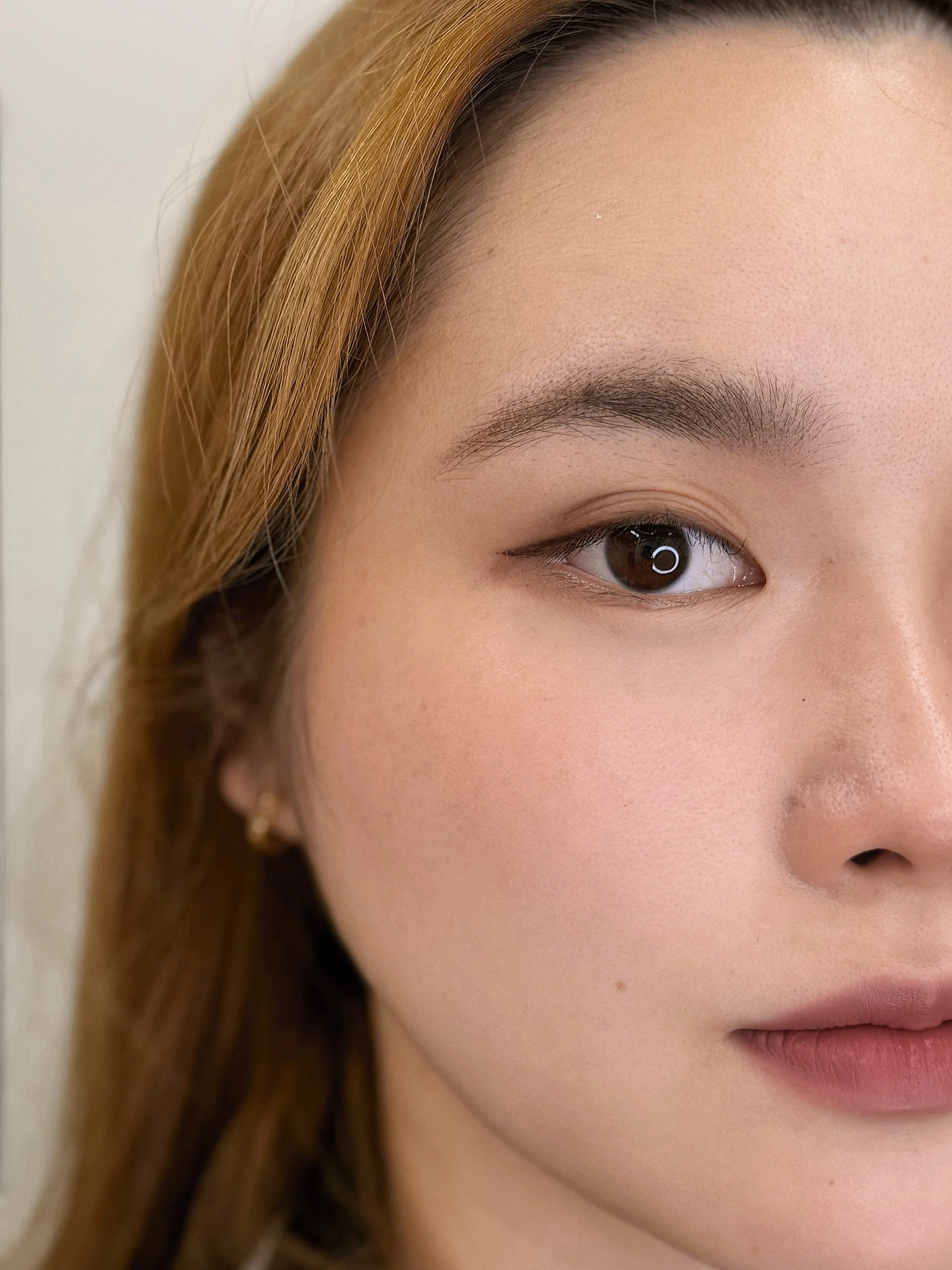
Designed around your faceEyebrow tattoo
- Duration
- 1.5 hours
- Longevity
- 1–3 years
- Price
- ₩350,000
- Touch-up
- ₩50,000 within 2 months
First impressions start with your brows.
Start with your natural brows, skin and facial proportions. Compare soft shading and individual strokes before choosing the approach that suits you.
How brows shape your expression
Why do brows make a face more attractive?
Your first impression is, in fact, already being judged within 0.1 seconds.
1. A first impression begins within 0.1 seconds
Psychology research shows that seeing an unfamiliar face for just 0.1 seconds is enough for people to start judging attractiveness, likability, trustworthiness and competence. Looking longer did not change that first judgment much; instead, confidence in the judgment already made tended to grow.[1]
The moment we see a face, we quickly form impressions such as likability, trustworthiness and competence.[1] And the impressions formed this way go on to influence real decisions.
A study of the US peer-to-peer lending market found that, even with similar credit scores, income and employment status, applicants rated as attractive were 1.59% more likely to have their loan funded, and paid interest rates about 0.60 percentage points lower.[2]
A first impression does not end as a mere feeling. At times it changes how much someone trusts you, and whether they choose you.
2. Brows are key to how a face is recognized
In one study, removing the eyebrows from familiar faces reduced people's ability to recognize them more than removing the eyes did.[3]
Brows are not a minor detail of the face. They are a core feature that makes a person recognizable and memorable as themselves.
What impression do you want people to remember you by?
CYAN analyzes the unique appeal of your face and designs brows that let the impression you want come through as naturally as possible.
3. Just 1mm changes the impression of a face
A small shift in where a brow starts, where it peaks, its length or its angle changes how far apart the eyes look, how wide the face reads, and the overall mood. Where you fill and where you leave open can also shift the impression, toward softness, trustworthiness or refinement.
4. CYAN looks at the face before the brows
Having studied psychology and worked as a clinical psychologist, I saw how deeply a small worry about one's appearance can shape a person's impression and confidence.
So we do not start by picking a trending brow shape. We first analyze the bone structure, the proportions of the forehead, the spacing and direction of the eyes, the brow bone and the way the muscles move, and the mood your face already carries.
Rather than fitting a trending brow onto your face,
we find the brow that shows your face at its most attractive.
Sources
[1] Willis, J., & Todorov, A. (2006). First Impressions: Making Up Your Mind After a 100-Ms Exposure to a Face. Psychological Science, 17(7), 592–598. View paper
[2] Duarte, J., Siegel, S., & Young, L. (2012). Trust and Credit: The Role of Appearance in Peer-to-Peer Lending. The Review of Financial Studies, 25(8), 2455–2484. View paper
[3] Sadr, J., Jarudi, I., & Sinha, P. (2003). The Role of Eyebrows in Face Recognition. Perception, 32(3), 285–293. View paper
Which concerns would you like to address?
If even one of these sounds like you
- 01“Drawing my brows every morning is such a hassle.”
- 02“My brows are short and sparse. Is it even possible?”
- 03“I look harsh. I want a softer impression.”
- 04“My old tattoo has turned red or blue.”
- 05“My brows are really uneven. I want them to match.”
- 06“I have something important coming up soon.”
Powder, hair strokes or combo brows?
Which technique is right for you
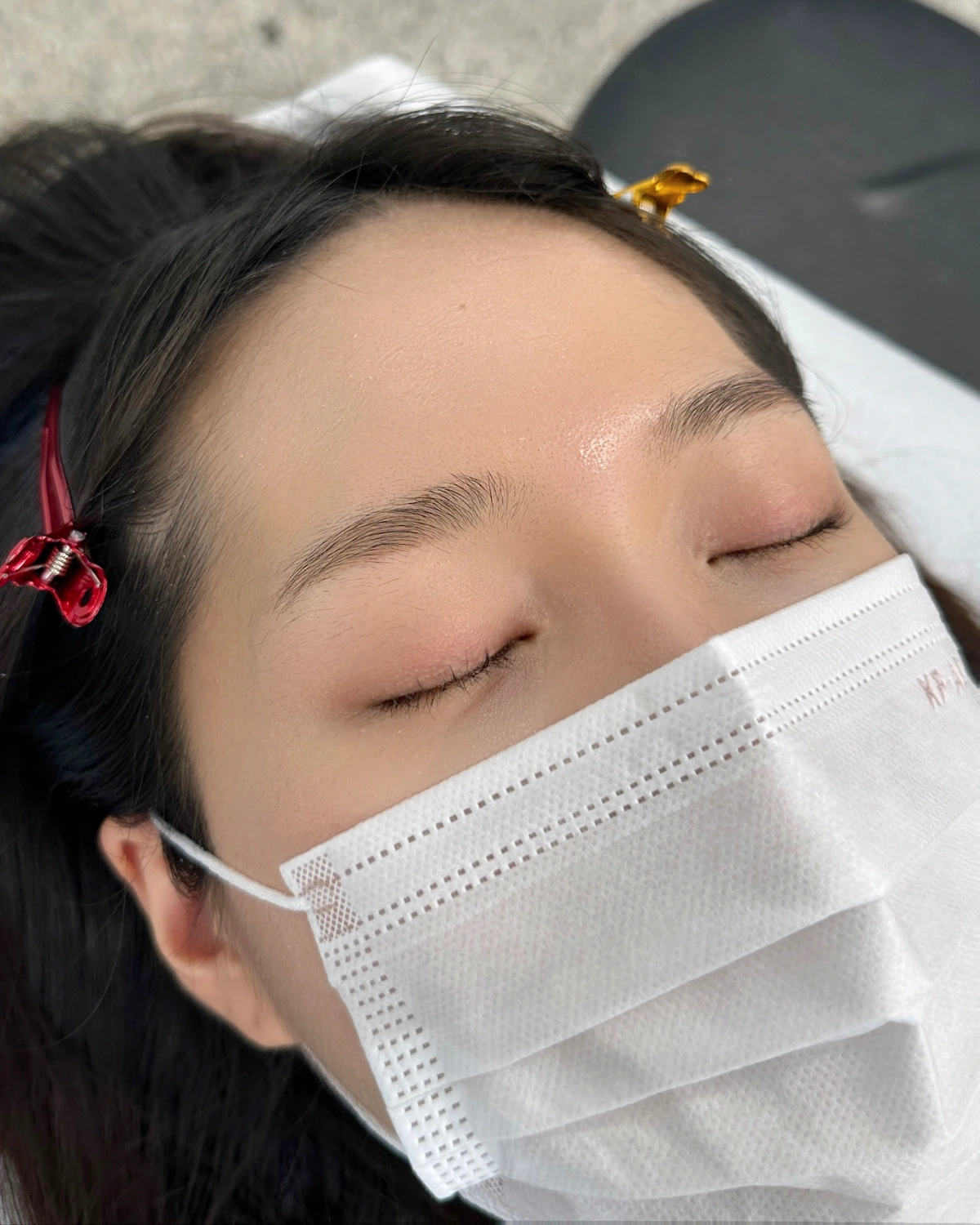
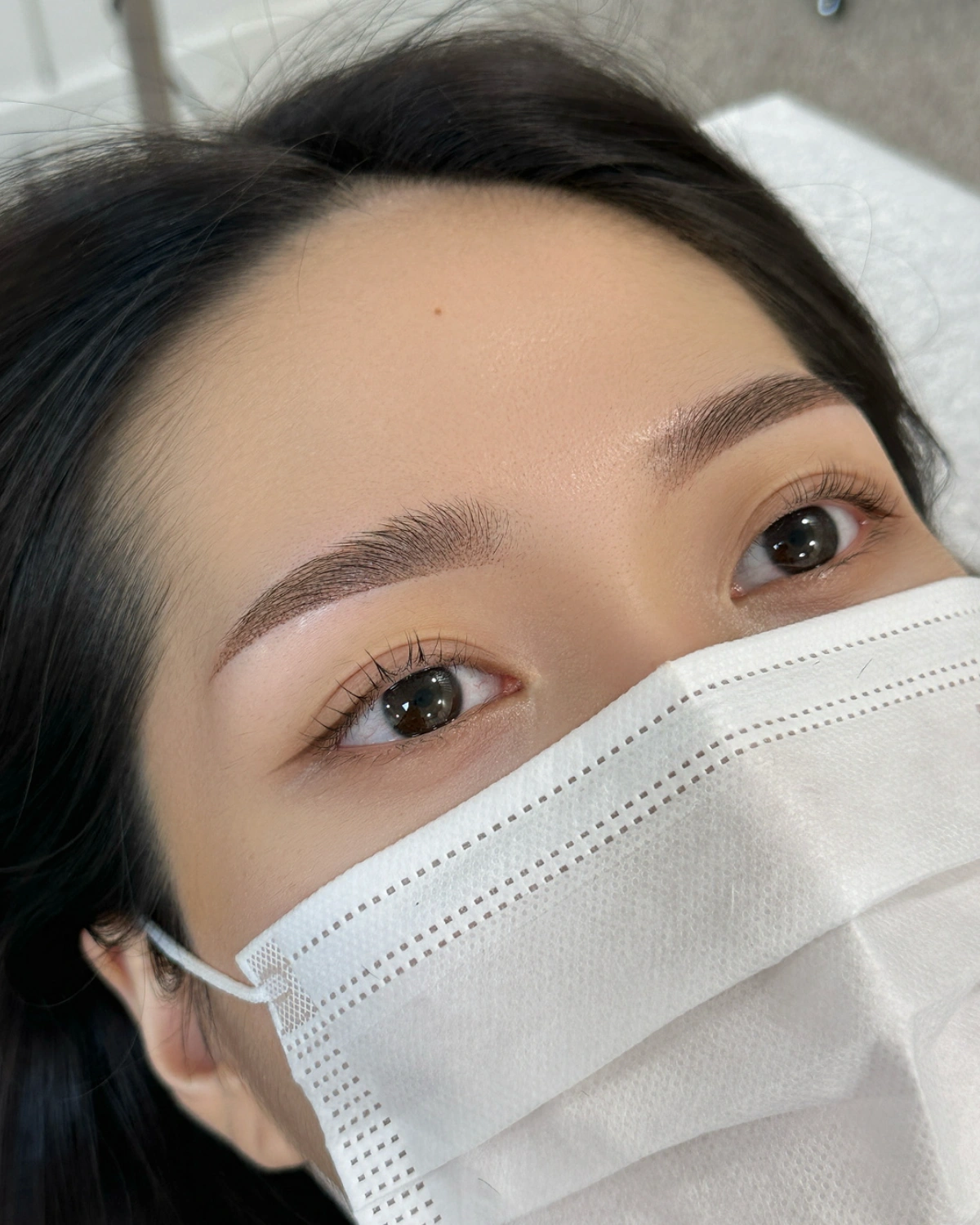
Powder brows (shading)
If you want the density you pencil in every day, with a barely-there makeup look
Fine dots are layered densely into a soft surface. It settles most reliably for those with little natural hair and for oily skin.
Hair-stroke (microblading)
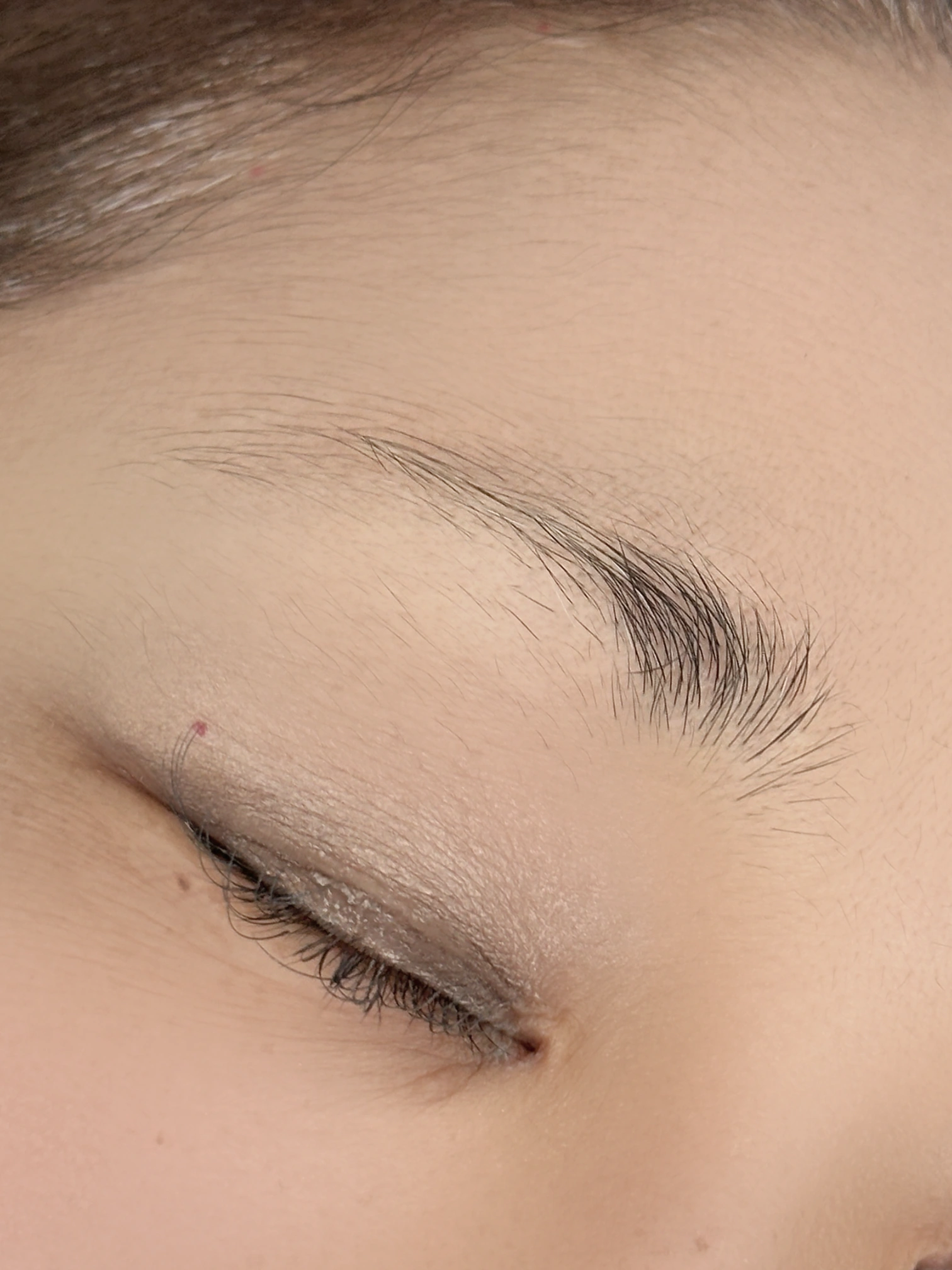
If you have natural hair and want every strand brought out
Strokes are placed one by one along the direction of your hair. The most natural finish, but on oily skin the lines can blur and clump, so there are cases where we advise against it.
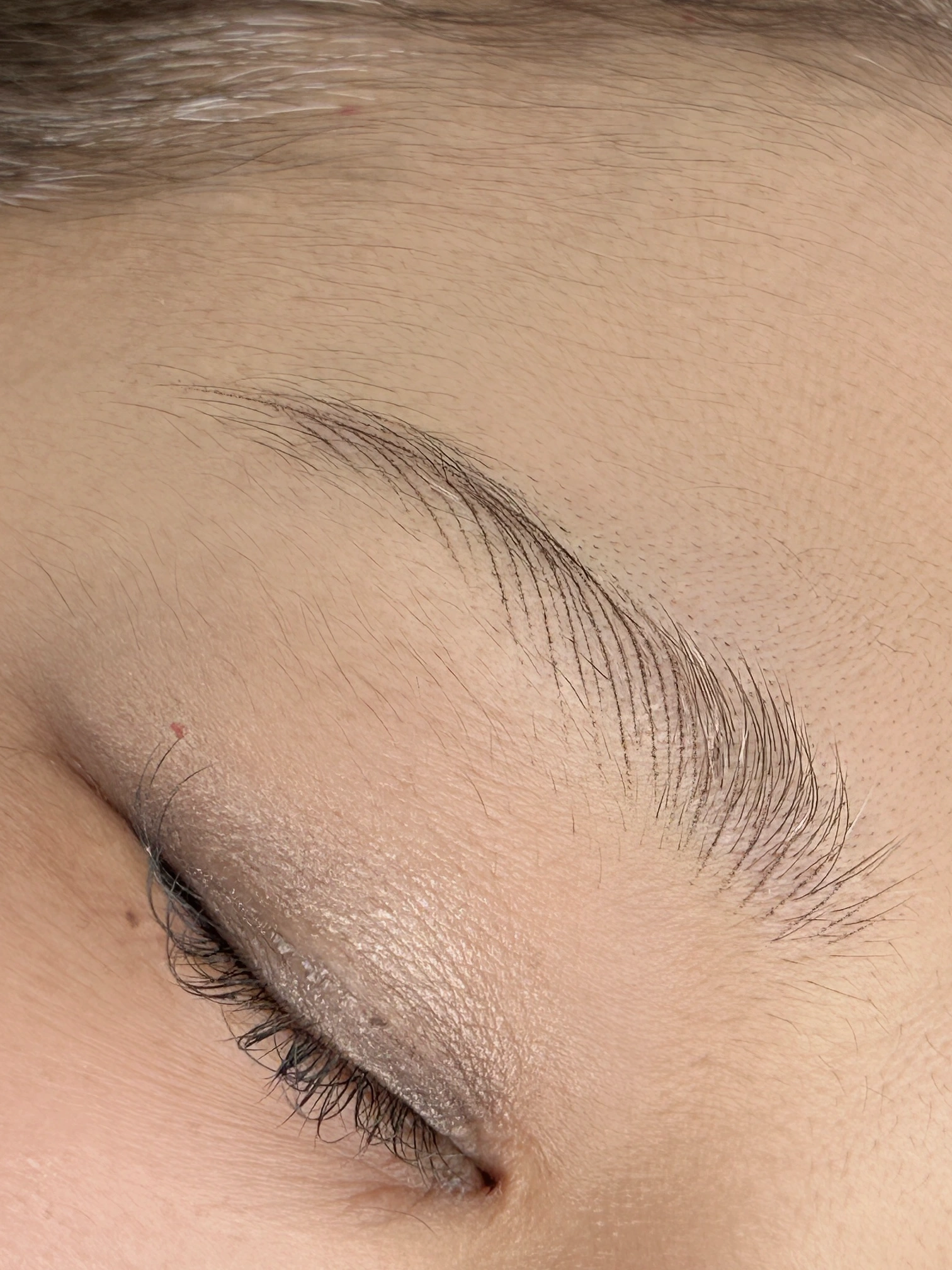
Combo brows (strokes + shading)
If you want both texture and density, as if you were born with it
Soft strokes at the head, filling into shading toward the tail. The most requested option right now.
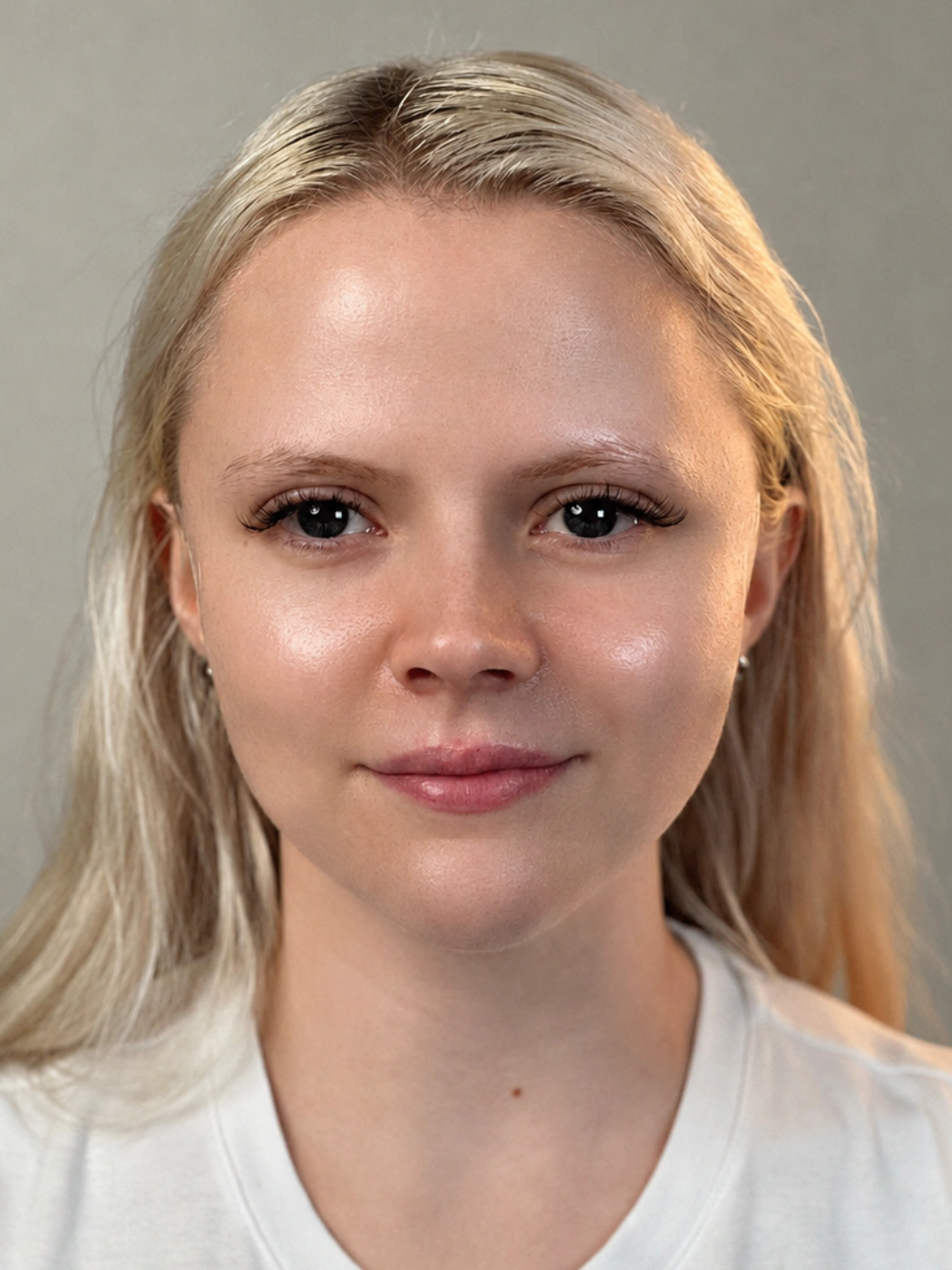
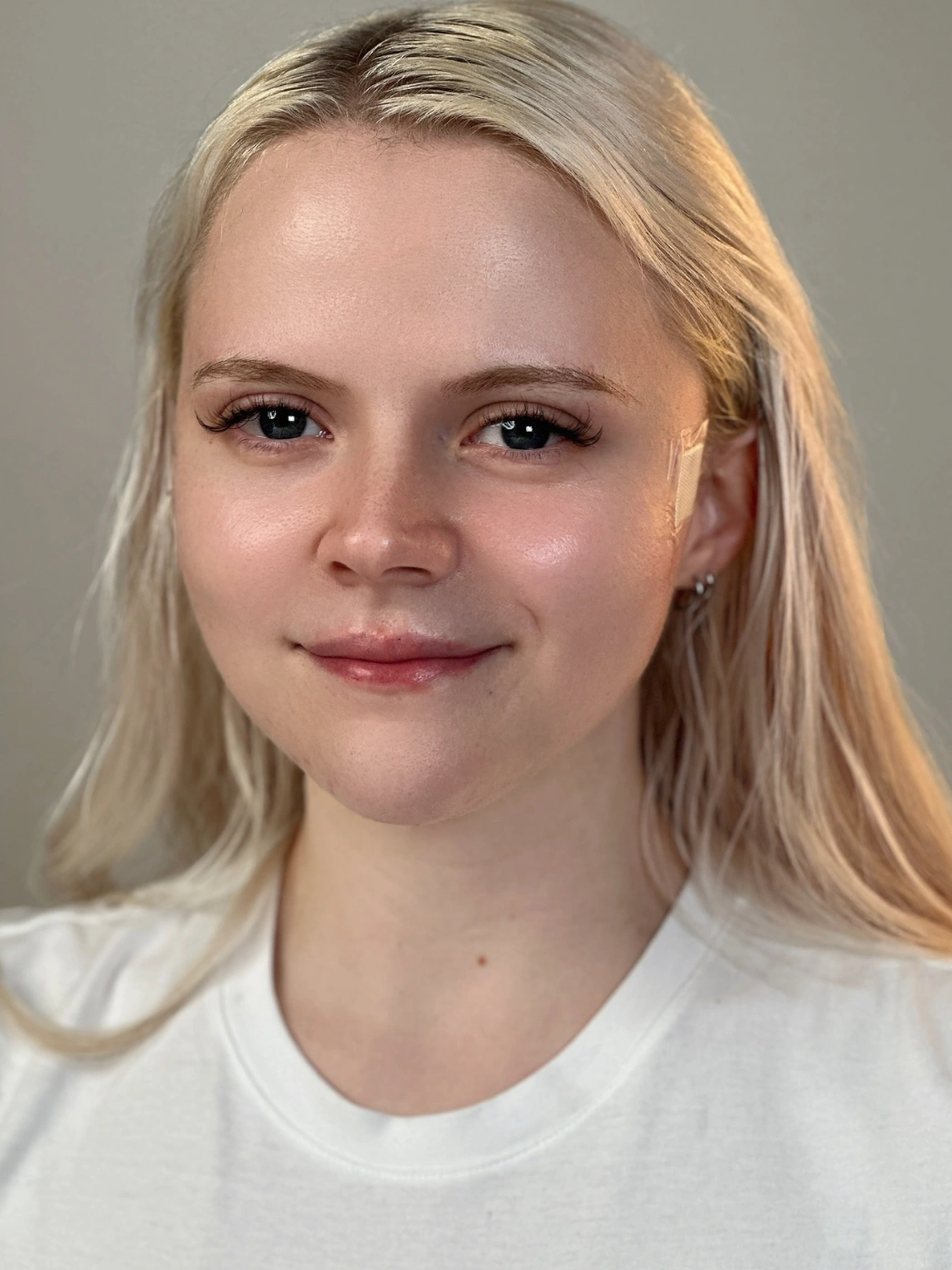
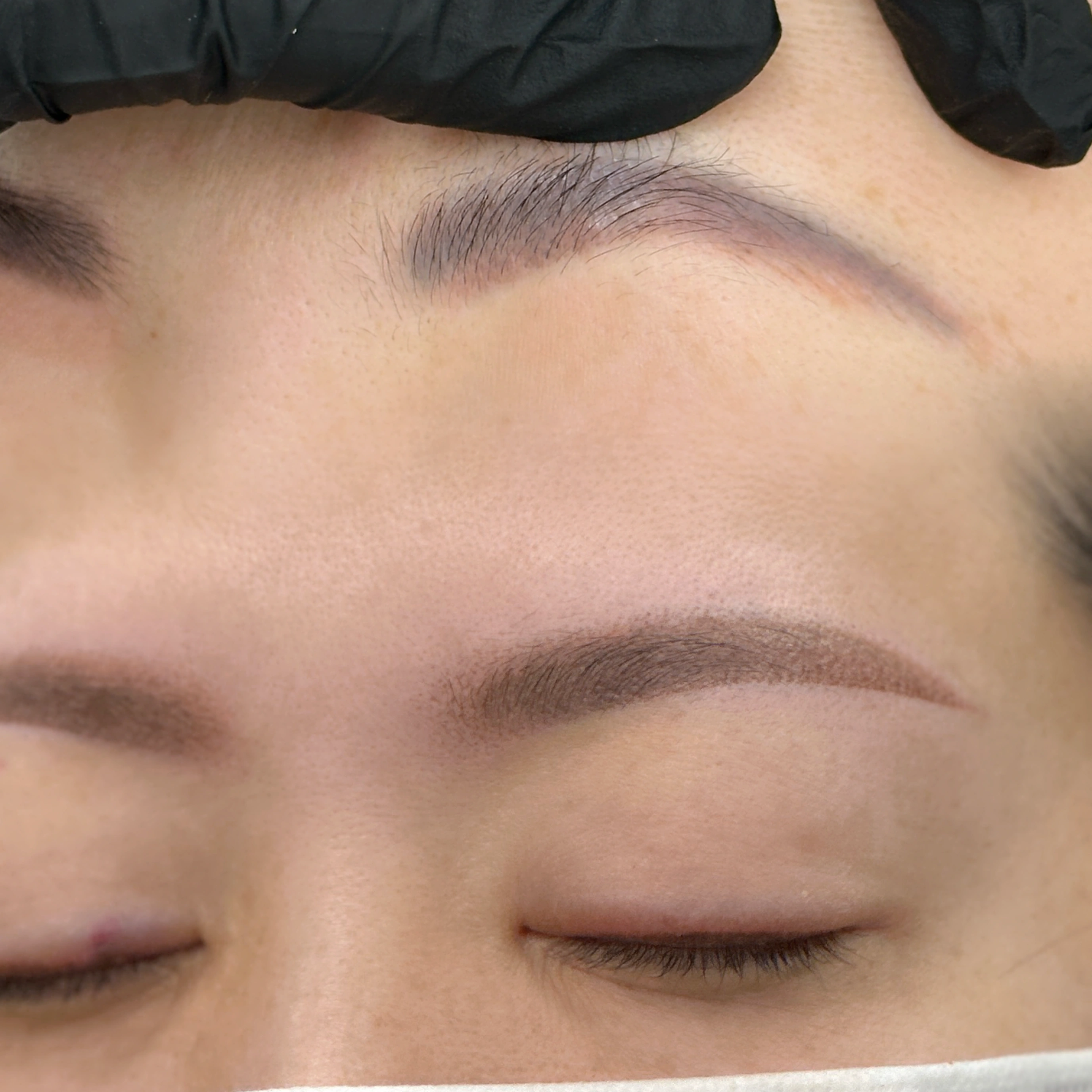
Impression redesign
If you want the angle and position of your brows redone too
We change both the strokes and the angle. Leftover color is cleaned up, then the brow is moved to where it fits your facial proportions.
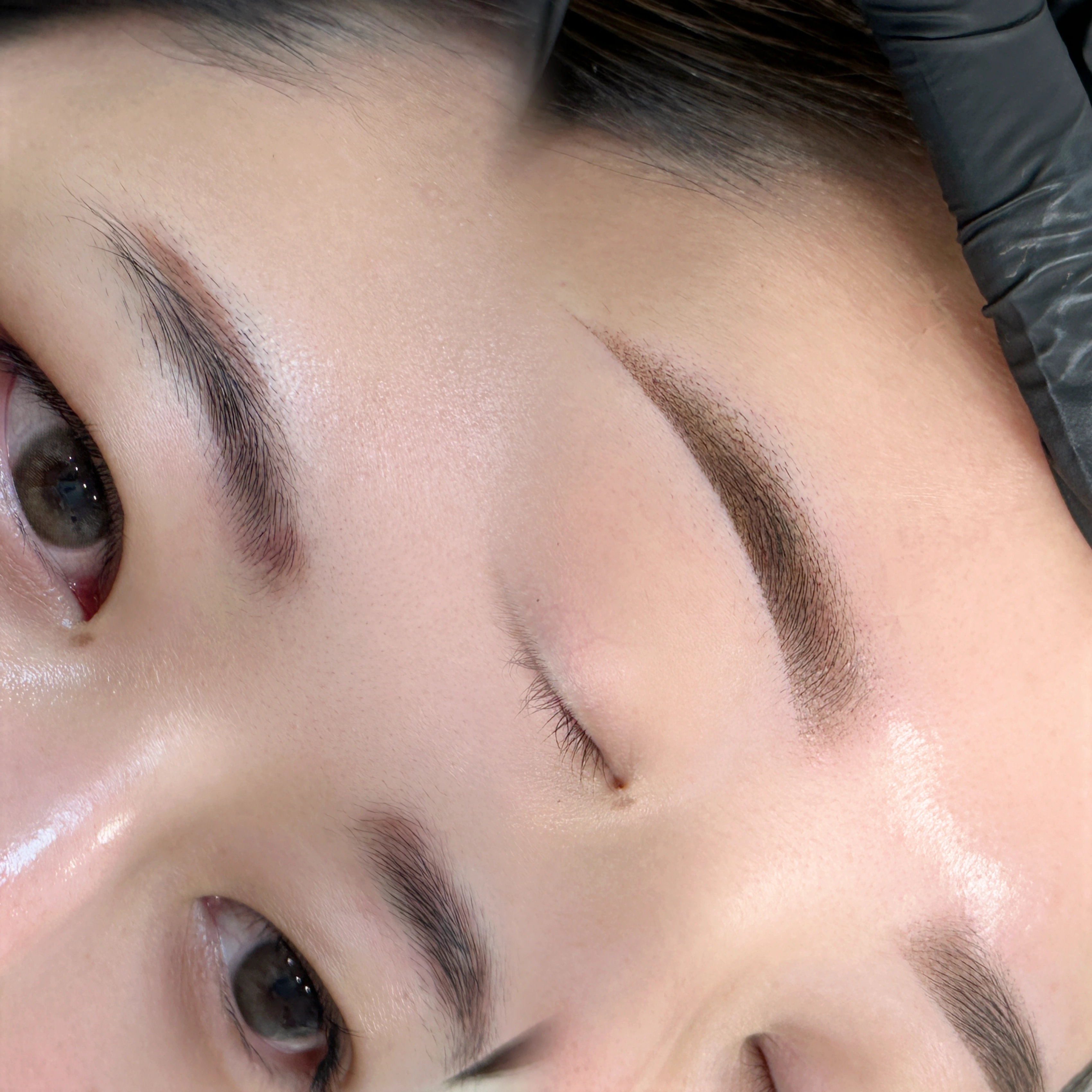
Designing for your face, skin and natural hair
Results come down to three things
We design an impression, not just a brow
A trending brow is never simply placed on top of a face.
We first analyze the bone structure and forehead proportions, the spacing and direction of the eyes, the movement of the muscles and the natural flow of the hair.
We look for why a face reads as harsh, why it looks tired, why it seems long or wide, and then plan where to fill and which lines to adjust so it looks more harmonious and more attractive.
Rather than setting a brow on a face, we create a design for one person only, one that makes the whole face look better.
Different skin, different technique
Hands that have worked on many ethnicities do not rely on one formula.
CYAN has worked directly with clients of many ethnicities and skin tones across several countries. With the same procedure, the way color develops and what remains after healing differ with skin tone and undertone, skin thickness and oiliness, and elasticity.
We analyze the density and flow of your existing brows, and any traces of previous PMU, and choose the pigment, density, depth and method individually.
We do not repeat the same technique on every skin. We plan the way each skin will take color most naturally, and stay harmonious as time passes.
We think about what remains, not just the day of
A good color is proven a year later, not today.
The color right after the procedure lightens as it heals, and over time it shifts again as it blends with the undertone of your skin.
CYAN plans the pigment, density and coverage not only for how the color develops at 6–8 weeks, but for how it stays and fades over 1–2 years. We do not overfill at the start; we check the healed result and complete only what is needed at the touch-up.
The ability to read this difference decides the result one and two years later. Whether it lingers as a red or blue shadow, or fades cleanly and blends into your natural skin tone, is decided here.
Not a brow that just stays dark, but a brow that melts in naturally while the whole face looks better. That is the result CYAN wants.
From consultation to aftercare
On the day, step by step
- 01
Consultation
We listen to the design, density and style you want. The direction is set here.
- 02
Cleanse · Disinfect · Exfoliate
The skin is prepared for work. Leftover dead skin makes the color settle unevenly.
- 03
Before photos
A baseline for before-and-after comparison. We use it again at the touch-up.
- 04
Tool setup
Only disinfected tools and single-use items. No exceptions.
- 05
Design · Symmetry check ①
We draw directly on your brows and look together. We only start with a design you have agreed to.
- 06
Hair tidying
Hairs outside the design are tidied. The line becomes crisper.
- 07
Work begins
We set the guideline from the tail and build the color gradually, wiping back as we go.
- 08
Midway sit-up check ②
We sit you up once to re-check symmetry, design and density. A face lying down and a face sitting up are not the same.
- 09
Mirror check ③
We look in the mirror together and fill in wherever more is needed.
- 10
After photos
Recorded from the same angle.
- 11
Aftercare cream
A cream that supports healing is applied.
- 12
Aftercare · Touch-up booking
We go over the first week of care and book your 6–8 week touch-up.
Questions about colour, discomfort and healing
The questions we hear most often
How do I choose a brow tattoo technique?
We assess your skin, existing brow hair and any old pigment, then compare strokes, shading and a combination of both. The choice depends on your starting point and preferred look.
One brow droops more than the other and they don't match. Can you make them identical?
Every face has some degree of asymmetry. The height of the eyes, the bone structure, the position of the brow bones and the strength of the muscles all differ from side to side, so making two brows identical, as if measured with a ruler, is difficult.
In fact, if you match only the brows to exactly the same height and shape without considering the differences in the face, the existing asymmetry can stand out more, or the face can look skewed.
CYAN's goal is not to copy one brow onto the other. It is to design brows that look as symmetrical and harmonious as possible across the whole face, balancing your features without anything feeling off.
In the design stage we check the bone structure, the height of the eyes, the movement of the brow muscles and your expressions in detail. Midway through the procedure we sit you up and re-check the balance from the front, the way your face is actually seen in daily life.
That said, asymmetry caused by bone structure or muscle movement cannot be fully corrected with pigment alone. Where the difference in muscle use is significant, we may suggest consulting a physician first about whether a muscle-relaxing treatment such as Botox is appropriate.
How far it can be balanced naturally is decided after we see your face both at rest and in expression, and we guide you toward the most suitable direction in the consultation.
I'm worried the color will turn red or blue over time.
How is brown made?
The brown in brow pigment is not a single color. It is mixed from several colors such as black, yellow and red. In fact, a study that analyzed 974 permanent-makeup inks found an average of 4 pigments in each product.¹
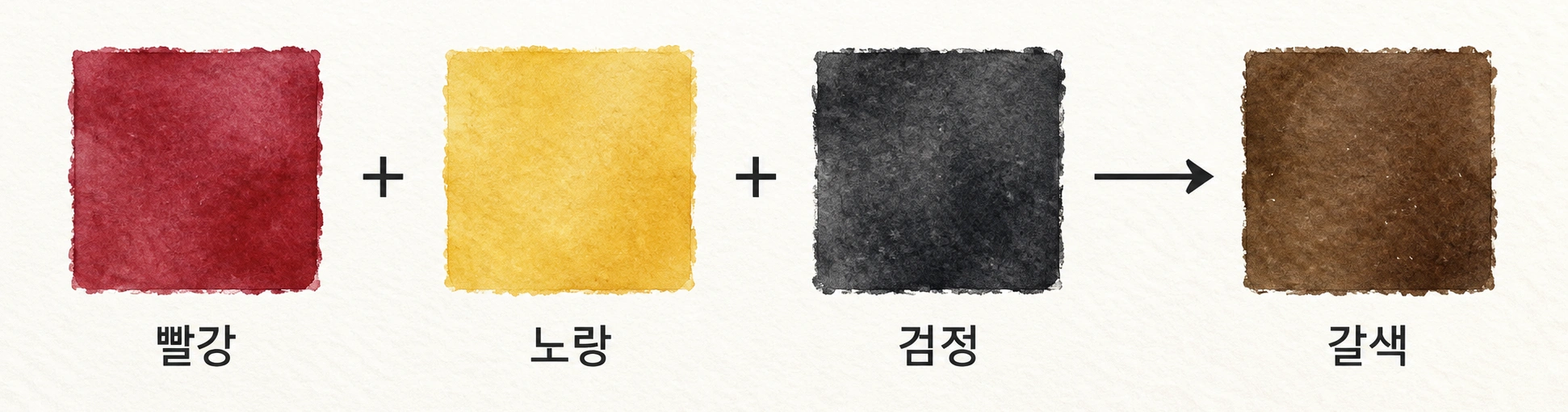
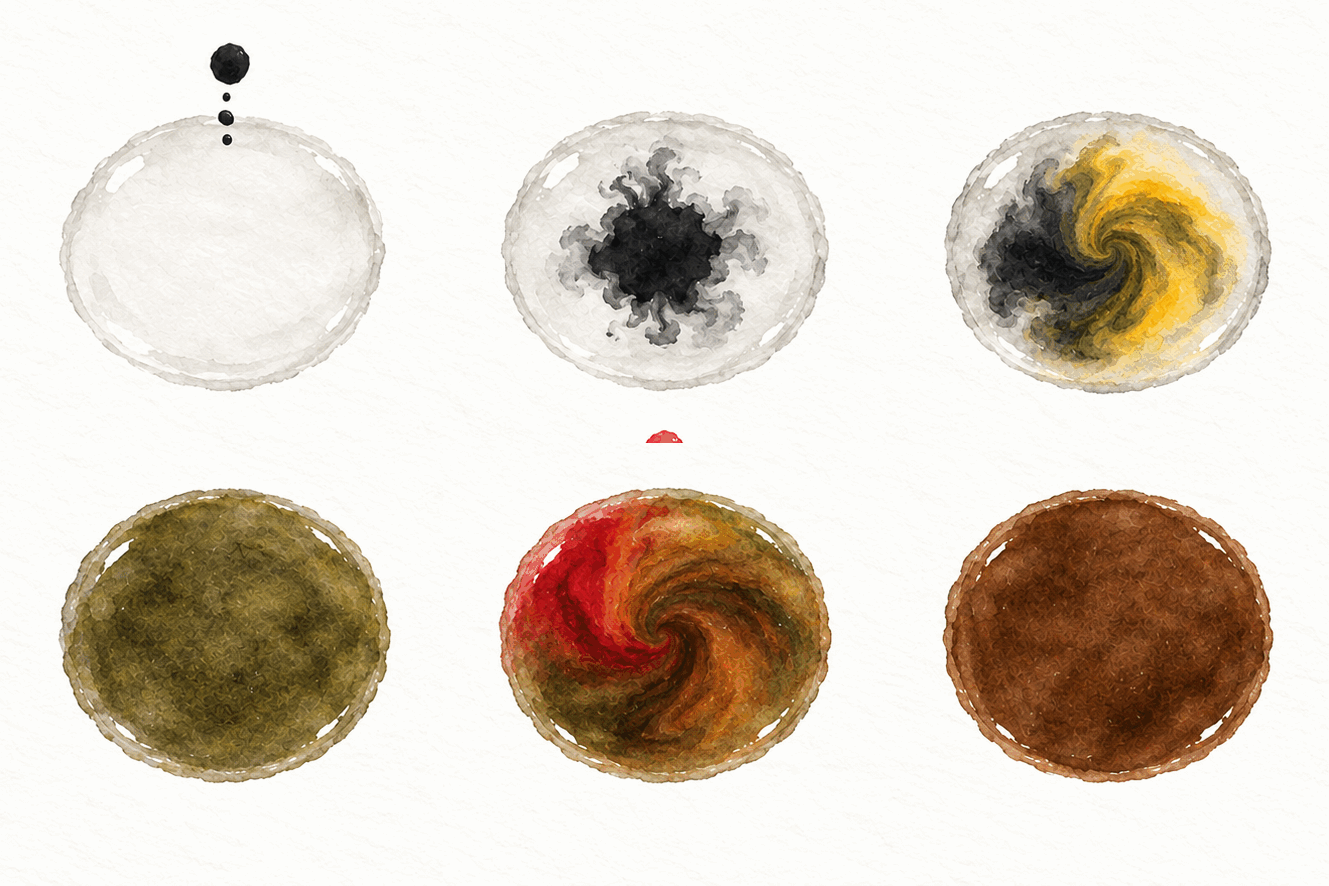
But these colors do not hold up equally. Some are especially weak against sunlight and break down first; others last much longer. In experiments, the light-sensitive pigments lost about 60% after 32 days under simulated sunlight.² On top of this, the body slowly carries pigment out of the skin.²
So as time passes, the brow lightens overall while tilting toward whichever color held out longest. This is why a brow that started brown can come to look reddish, or grayish. The color did not change into another color; what remained simply became visible.
A bluish look has a different cause. When pigment sits deep in the skin, only the cooler wavelengths reach our eyes as light passes through the skin and back out. It is the same principle that makes a black stone look blue in clear water.³ The more pigment particles there are, and the more densely packed, the more pronounced this effect becomes.⁴
A change in how the color looks does not in itself mean an allergy or a side effect. But if the brow area becomes red and swollen, itchy or hot, that is a different matter, so please check with your artist or a dermatologist.
That is why CYAN does not aim for “brows that last as long as possible.”
Going deep and dark makes it last. But the density of pigment in the skin rises, and with it the chance that it lingers years later as a red or blue shadow.
Besides, permanent makeup does not disappear cleanly on its own. Research shows that when the cells holding the pigment reach the end of their life, neighboring cells take the pigment up again, which is why tattoos persist.⁵ The more you put in at the start, the more remains at the very end.
Removing an old, red, blue or botched eyebrow tattoo takes laser removal, and creating a new design as an eyebrow cover-up means layering yet another pigment over what is left.
Your face, your hair color and the brow shape that suits you keep changing. There is no guarantee that a brow design that suited you three years ago still suits you now.
If we do not overfill the color at the start and design it to fade naturally over 1–2 years, then a year later, when you come back, the old traces will not get in the way of the new design, and we can once again complete beautiful brows that suit your face and your taste at that time.
Good permanent makeup is not the brow that lasts longest. It is the brow that fades cleanly and does not block your next choice.
References
1. Woodruff CM, et al. Identification of the pigments used in permanent makeup and their ability to elicit allergic contact dermatitis. J Am Acad Dermatol. 2024.
2. Engel E, et al. Tattooing of skin results in transportation and light-induced decomposition of tattoo pigments — a first quantification in vivo using a mouse model. Exp Dermatol. 2010;19(1):54–60. / Hauri U, Hohl C. Photostability and Breakdown Products of Pigments Currently Used in Tattoo Inks. Curr Probl Dermatol. 2015;48:164–169.
3. Humzah D, et al. Tyndall, Rayleigh, Mie, and Raman scattering: Understanding their role in aesthetics. J Cosmet Dermatol. 2024.
4. King M. Aesthetic Complications: Management of Tyndall Effect. J Clin Aesthet Dermatol. 2020.
5. Baranska A, et al. Unveiling skin macrophage dynamics explains both tattoo persistence and strenuous removal. J Exp Med. 2018;215(4):1115–1133.
I still have an old eyebrow tattoo. Can it be covered up?
Yes, it can. Drawing on the principles of color and perceptual psychology, CYAN analyzes the color, brightness and extent of the red or blue-shifted residue left by a previous eyebrow tattoo, and corrects the color and density so the old work does not stand out on your face.
A cover-up does not mean simply blanketing everything in dark brown. Covering the old color using the principles of perceptual psychology while adding density only where it is needed, so that even a covered-up brow looks as natural as possible, is what sets CYAN's cover-up work apart.
But there are cases where removing first is better than covering.
- When the old design runs well outside the new one, so the brows look doubled
- When the previous brow is too thick or very different from the shape you want
- When the residue is so dark that a light brow with visible strokes is hard to achieve
- When making the brow thicker and darker to cover it would only make the face look harsher
Forcing a cover-up in these conditions may hide the color for now, but the brows can grow thicker and heavier over time. So CYAN does not only ask whether a red or blue brow can be covered; we first judge whether covering the residue will actually make the face look better.
If removal is the route to a more natural result, we recommend lightening the red or blue residue first and then designing fresh. Send us a clear, makeup-free photo and we will check the color and shape of the current residue, then advise which is more suitable, cover-up or removal.
Does it hurt?
Brows are one of the less painful areas. Because we work in the shallow layers of the skin, most clients describe it as mild pressure or a light scratching feeling.
How long does the procedure take?
A full session typically takes 1.5 hours, including consultation, design and the procedure itself.
What is the healing time?
Expect mild redness for 1–2 days. The brows look darker at first and lighten by about 30–40% as they heal over 4–6 weeks.
I have oily skin. Will it fade quickly?
Oily skin does tend to lose color faster. That is why we do not push the color too far in the first session; we look at the healed result and build density at the touch-up.
Do I need a touch-up?
The first session is where the color is set. At 4–6 weeks, once healed, we fill only the gaps and top up the color. For most people, this is where the brows are completed.
Treatment examples
Results speak louder than words
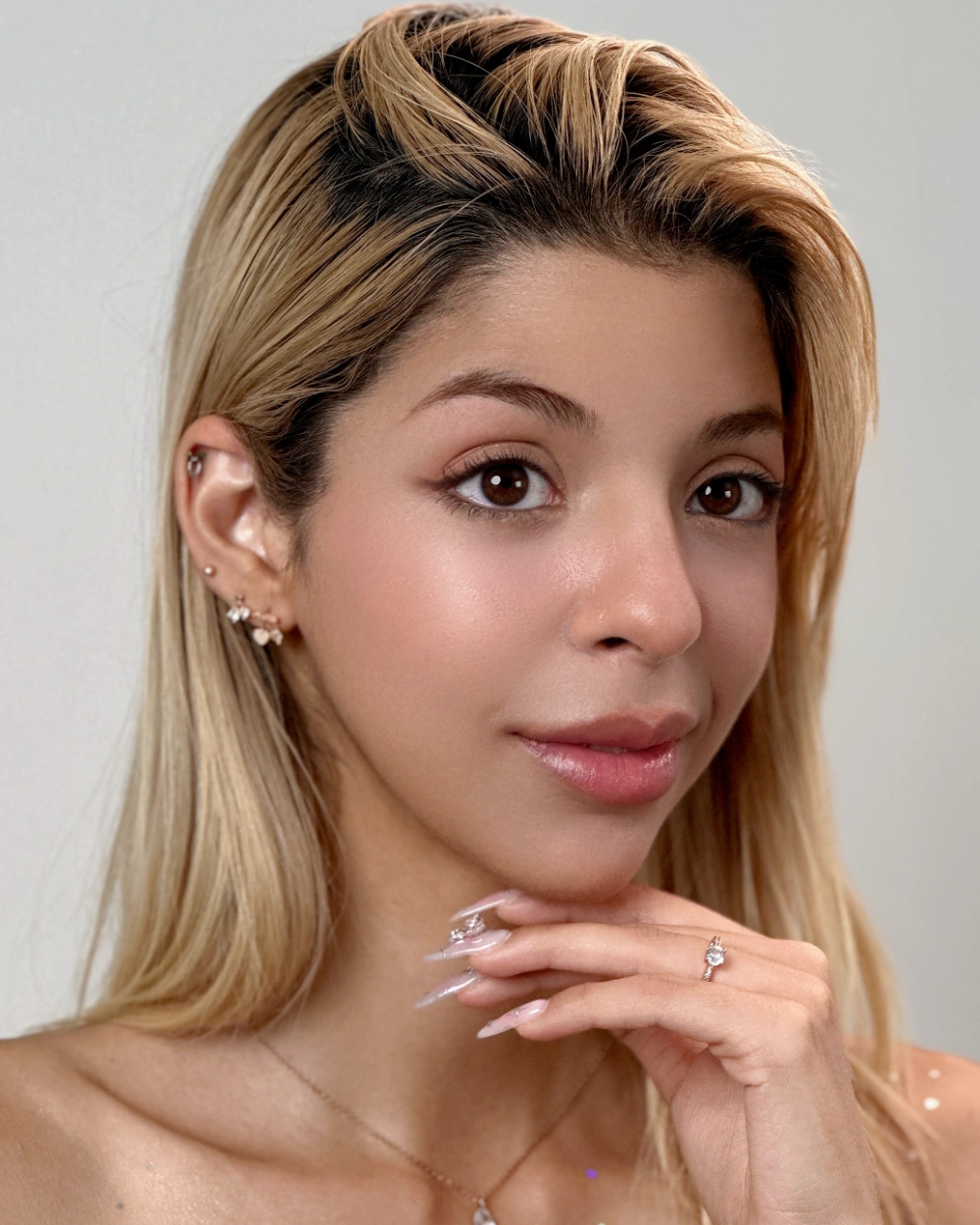
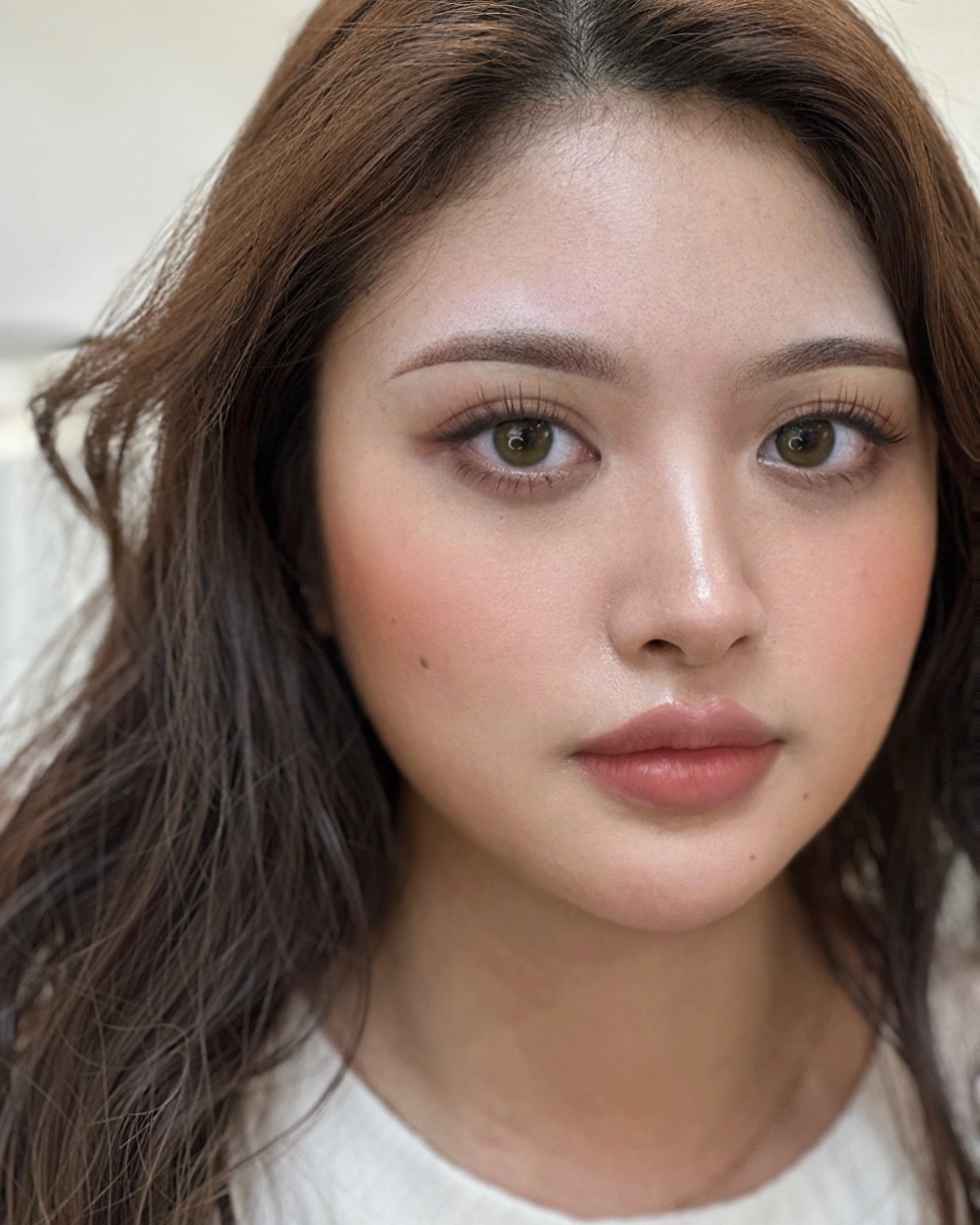
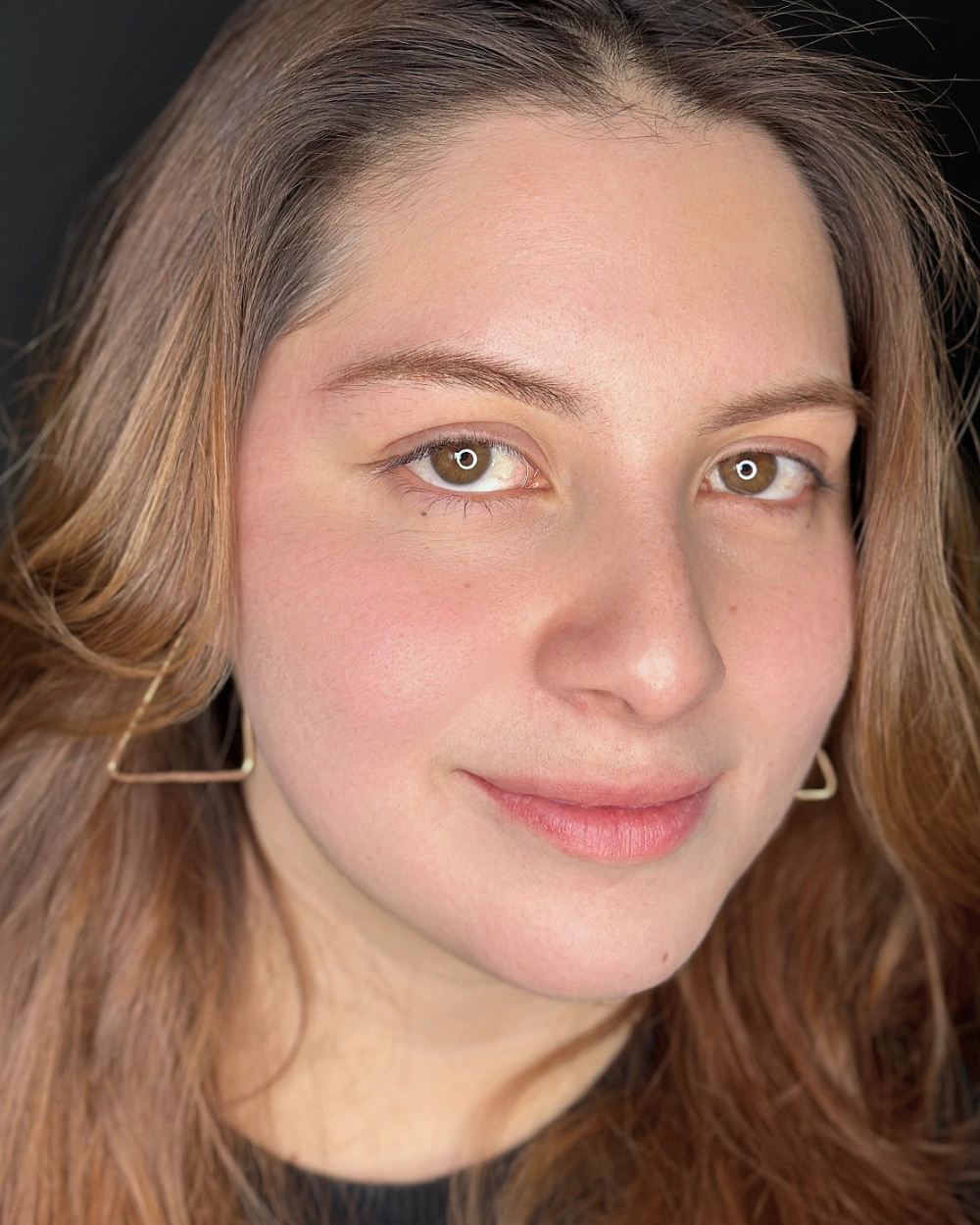
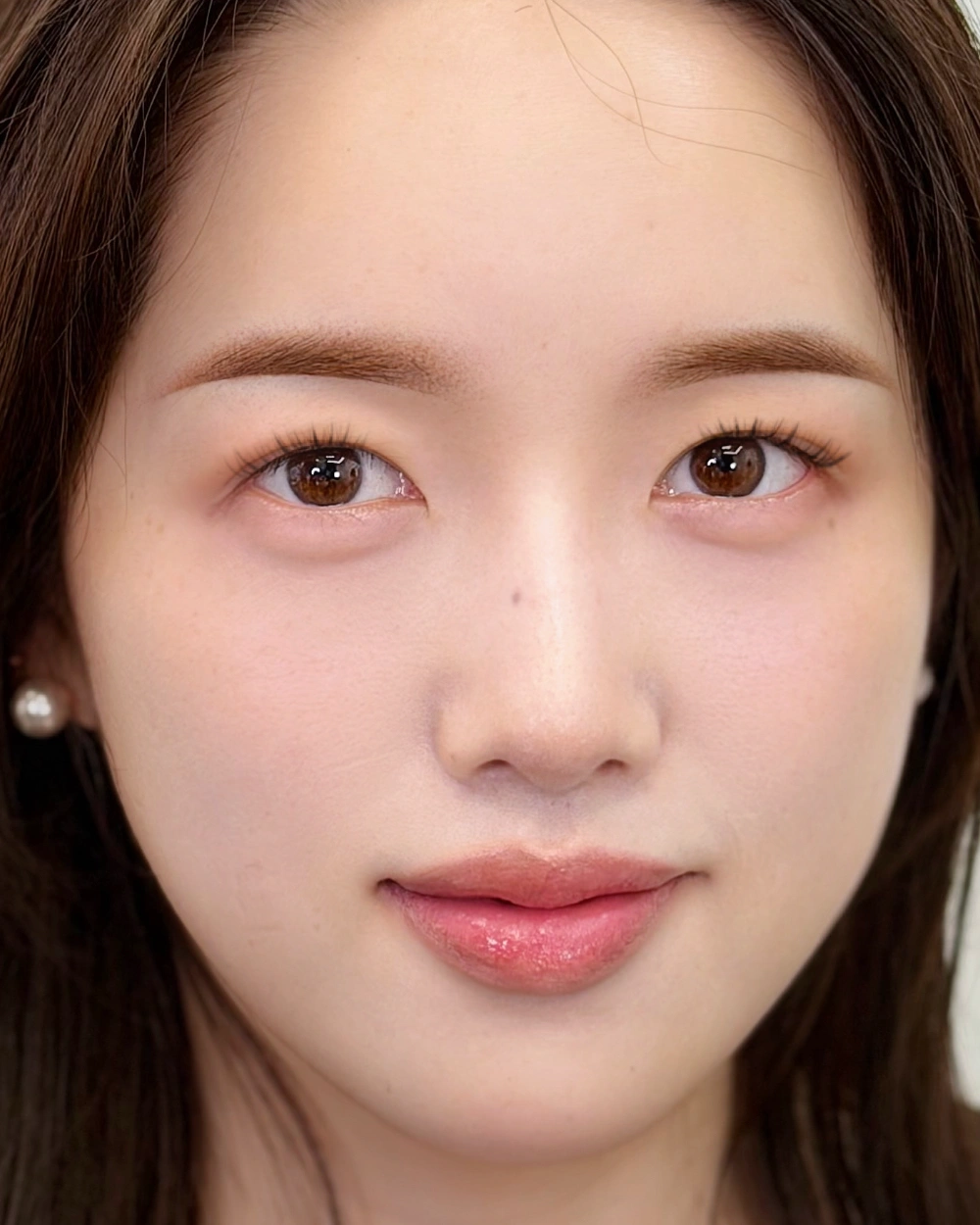
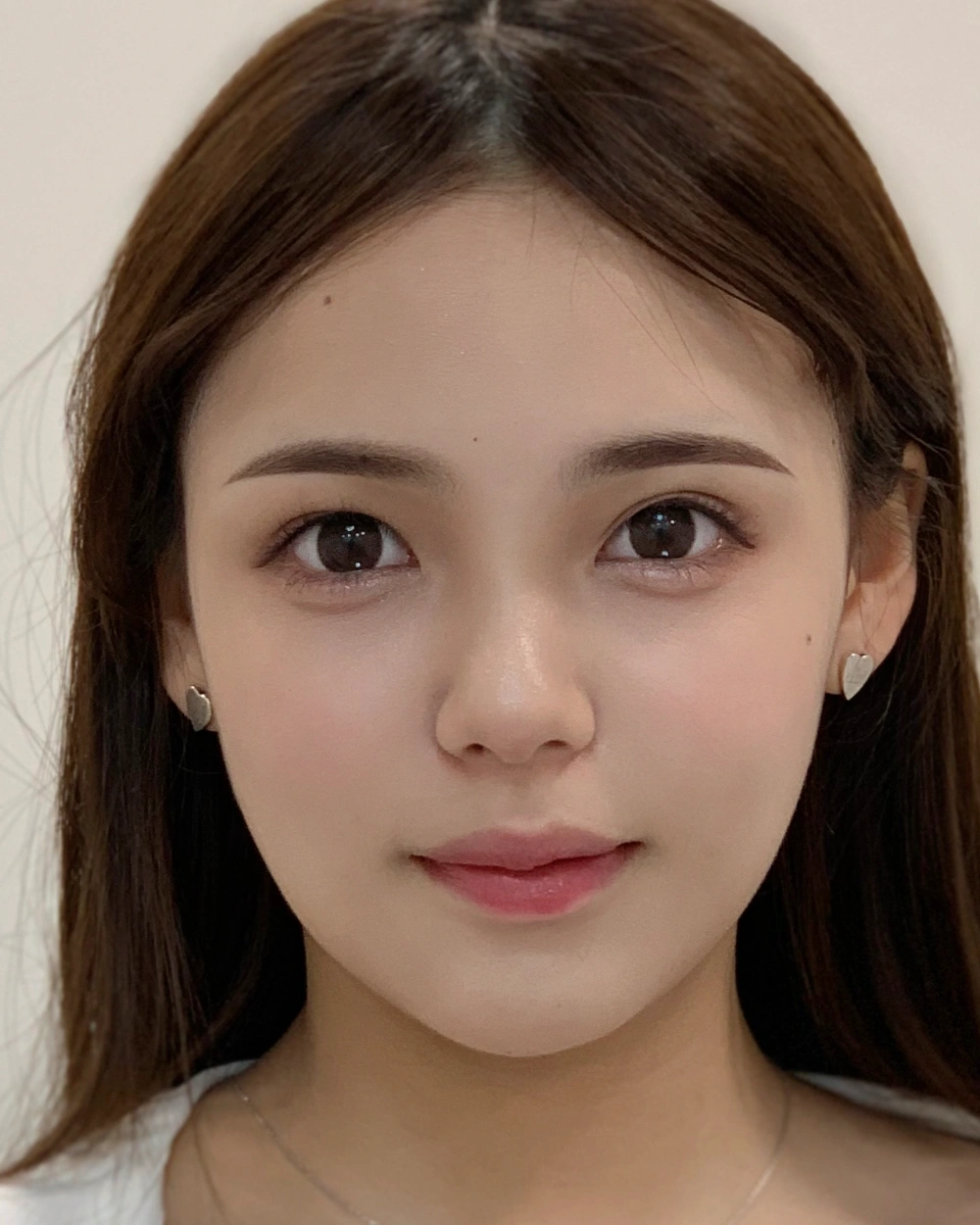
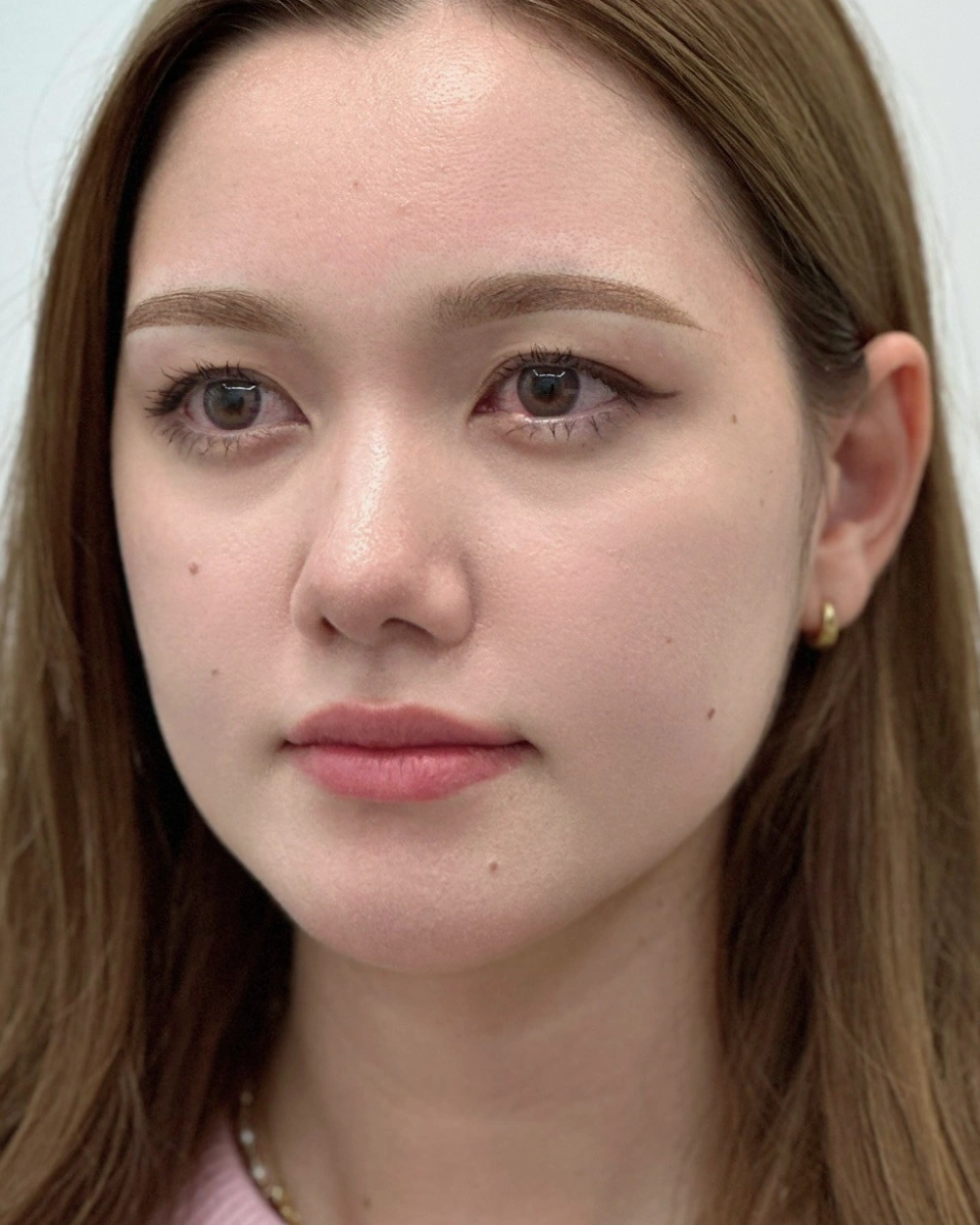
※ Real client photos. How the color develops and how long it lasts vary from person to person with skin and lifestyle.